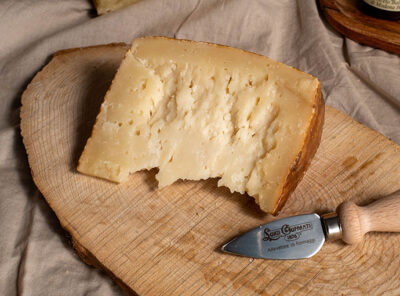
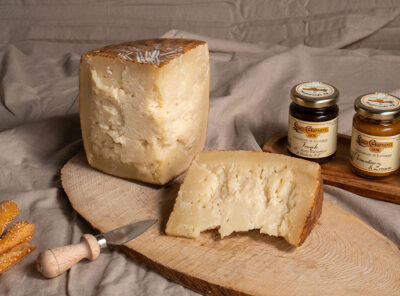
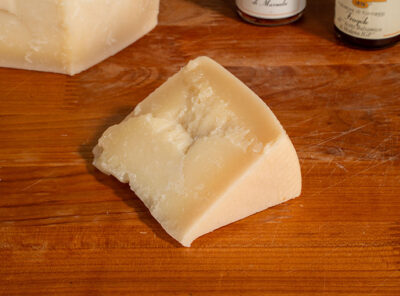
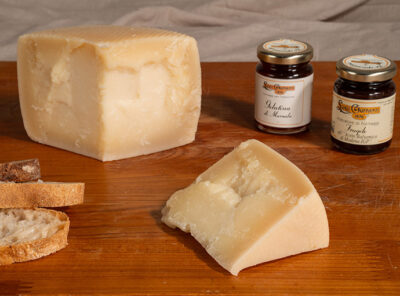
Pecorino dei Templari – 250/300 gr
15,30 €
Pecorino “Dei Templari” comes from an ancient Romagna peasant tradition.
As the Christmas and Easter holidays approached, the Azdora (housewife), to earn a little extra money, would occasionally steal some of the finest pecorino cheese from her cheesemaker husband, which she would then secretly process, trying to change its taste and flavor, and then sell at the market.
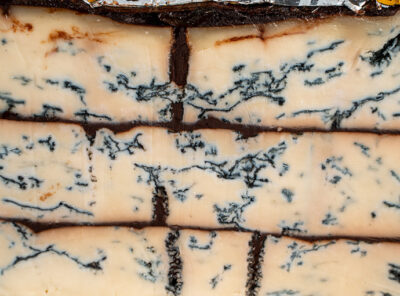
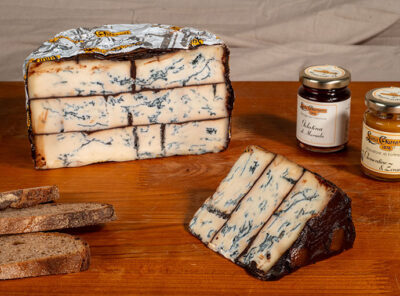
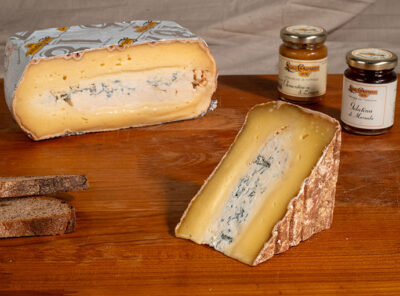
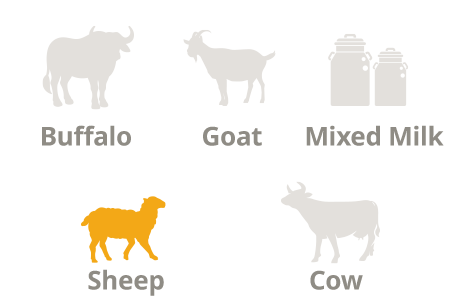
“Pecorino dei Templari” is made from sheep’s milk and begins its lengthy production process ten days after production. It is washed with whey every five days and left to dry in ventilated caves until the thirtieth day. It is then anointed with a base of oil and balsamic vinegar and placed in vats, interspersed with layers of juniper. Every week, the Pecorino is removed from the racks to rotate and dry better, then coated again with balsamic vinegar and replanted with juniper berries.
This maniacal operation is carried out until 70-80 days of seasoning are reached.
Finally, it is tanned, first with a layer of oil, then with balsamic vinegar and left to dry in ventilated caves for about 10 days.
The end result will be a Pecorino that is unique in its kind, both in terms of aromas and flavours.
Characteristics

Appearance
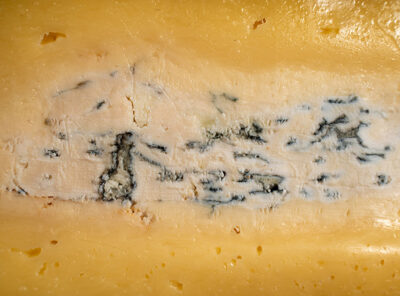
very white paste that melts on the palate
Taste
intense, spicy and dry
Pairings
Raw vegetables and beef carpaccio. Wines: Sangiovese superiore vintage or a structured, not too tannic red. Mixed vegetable mustard. Tuscan bread. Crust: inedible.
Technical specifications
| Weight | 0,300 kg |
|---|---|
| Milk | pasteurized milk, sheep's milk |
| Processing | pressed |
| Salting | dry |
| Seasoning | 1–6 months |
| Fat | 44% Mgss |
| Weight | 250/300 gr |
| Producers | cheesemakers of the Tuscan-Emilian Apennines |
| Flavour Intensity | 4 |
| Occasion of Use | Cheese board |
| Paste Type | Semi-hard |
Related products

Erboricao – 250 gr
250-500-750 gr
13,65 € 40,95 €ADD TO CART This product has multiple variants. The options may be chosen on the product pageGorghié – 300 – 600 gr
300/600 gr
8,70 € 17,60 €ADD TO CART This product has multiple variants. The options may be chosen on the product page